How to Write a Best Man Speech: Structure, Tips & Examples

Writing a best man speech is not as hard as it feels right now. The blank page is the worst part. Once you have a structure, a couple of real stories, and a clear sense of what you’re trying to say, the rest is just editing.
This guide walks you through the whole process, from working out what to include to delivering it on the day without your hands shaking too much. By the end, you’ll have a working draft and a plan.
Want to know what a best man actually does? We’ve got you.
Best man speech structure: the template that works
Every great best man speech follows the same basic shape, whether it runs three minutes or six. Treat it less like a script to copy and more like a running order: get the warmth in early, and it earns you the right to be funny in the middle.
1. Introduce yourself (30 seconds) Tell the room who you are and how you know the groom. Don’t just say your name; give one detail that shows the relationship and sets the tone. The best openings manage both at once.
2. Stories about the groom (60–90 seconds) One or two stories, not five. Each story should illustrate something true about who he is: a character trait, a recurring habit, a defining moment. The best stories are ones he can’t deny. Keep each one tight: set it up, land it, move on.
3. When he met his partner (30–45 seconds) This is where the speech pivots from roast to celebration. You knew him before, so say what changed and what you noticed when he met her. One specific, honest observation here does more than two minutes of generic “she makes him so happy.”
4. Something genuine about the couple (30–45 seconds) This is the section most best men rush, because it feels harder to write than the jokes. Don’t rush it. A specific observation about why these two people work, something only someone who knows them both could say, is what turns a speech from funny into memorable.
5. The toast (30 seconds) End on the couple, not a callback to an earlier joke or one more story. Raise the glass, say something sincere, and give the room a moment to join you before you sit down. The toast tells everyone you’re done, so use it properly.
How to open a best man speech
The first line sets the tone for everything that follows. Get it right and the room is with you from the start. Get it wrong and you spend the next four minutes winning them back.
A strong opening signals one of two things straight away: that you’re funny, or that you’re sincere. Both work. What doesn’t work is a generic opener that does neither, along the lines of “for those who don’t know me, I’m [name], the best man” – that’s the spoken version of starting an email with “I hope this finds you well.”
The best openings establish your relationship with the groom and hint at what’s coming. For example: “I’ve known [name] for fifteen years, which means I know exactly which stories I’m not allowed to tell today – and roughly how many of them I’m going to tell anyway.”
If you’re nervous, don’t open with that. Audiences forgive nervousness but they don’t want to spend five minutes managing it on your behalf. Acknowledge it once at most, then get on with the speech.
For a full list of opening lines you can adapt, see our best man speech examples guide.
How to find the right stories for your speech
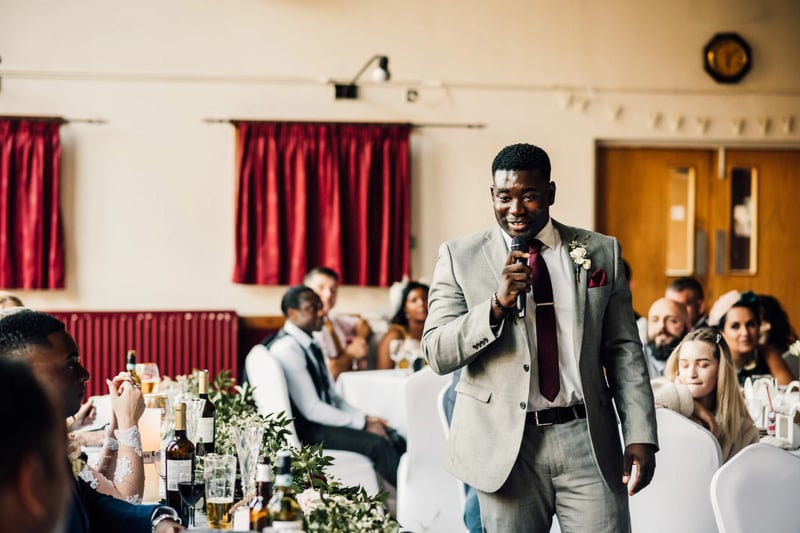
The stories are the hardest part to write and the most important part to get right. Here’s a process that works.
Start by listing, not writing. Spend ten minutes writing down every memory, moment, or observation about the groom that comes to mind, without editing or judging any of it. Don’t write sentences yet, just notes. You’re looking for raw material, not finished copy.
Look for stories that show character. The best stories aren’t necessarily the funniest; they’re the ones that reveal something true. A story about him being stubborn, or loyal, or terrible at directions, or unexpectedly kind in a specific moment. These land because the room recognises them even if they weren’t there.
One story in full is better than three half-told. The most common mistake in best man speeches is too many stories not given enough room to breathe. Pick one or two, tell them properly, and cut the rest.
Find the pivot point. The moment your second story ends, you need to be ready to talk about the partner. The best pivot is one that comes naturally out of the story – “and then he met [name], and everything I just described about him got about thirty percent more organised.”
For detailed advice on writing jokes that actually land, see our best man speech examples guide.
How long should a best man speech be?
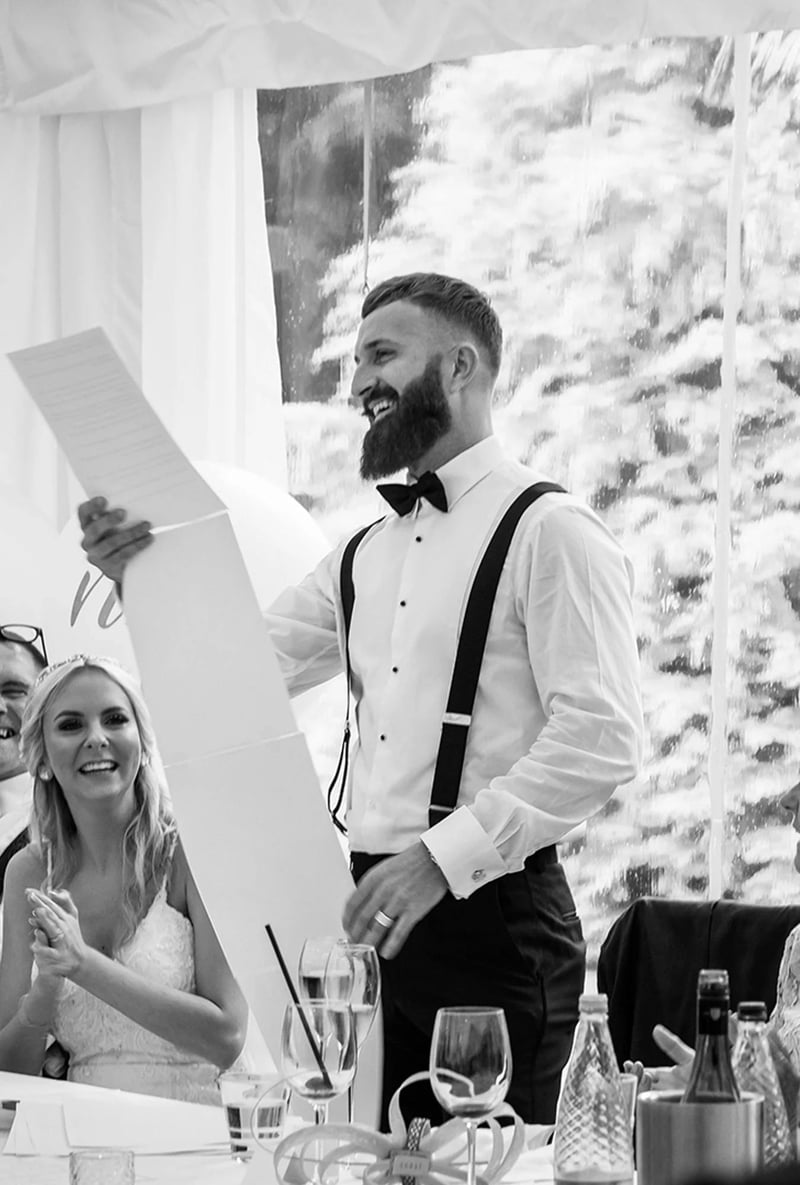
Four to five minutes is the target: roughly 550-700 words spoken at a comfortable, unhurried pace. Most people speak faster when they’re nervous, which means a speech that runs five minutes in your kitchen will run closer to three and a half in the room. Time it standing up, speaking aloud, at the pace you’d actually use.
Under three minutes can feel like you didn’t make much effort. Over seven minutes, you’re testing even the most patient room, no matter how good the material is. If you find yourself cutting things down to hit five minutes, cut the weaker stories first. The speech gets better every time you remove something that doesn’t earn its place.
What to avoid in a best man speech
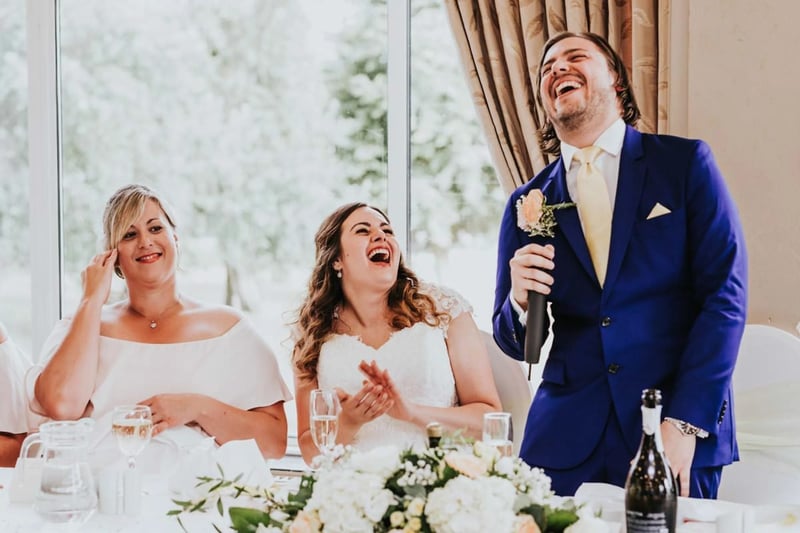
Anything about an ex. Even if it’s framed as a joke. Even if everyone involved is fine with it. It makes the partner uncomfortable, it makes their family uncomfortable, and it’s never as funny as it feels when you’re writing it at 11pm.
Stories that only work for four people in the room. Inside jokes have their place – a quick reference that only the groom catches is fine. A five-minute story requiring a detailed backstory to follow is not. If you have to explain the context, the story probably isn’t strong enough to carry the speech.
Running commentary on your nerves. Mention it once, briefly, if you need to. Then move on. Using nerves as a recurring theme makes the audience nervous on your behalf and undermines every joke that follows.
Going too long. The room will forgive almost anything except going on too long. When you’ve said what you came to say, stop.
Anything you’d want the partner’s parents not to hear. That is your filter. If you’re not sure about something, that uncertainty is the answer.
Delivering your speech on the day
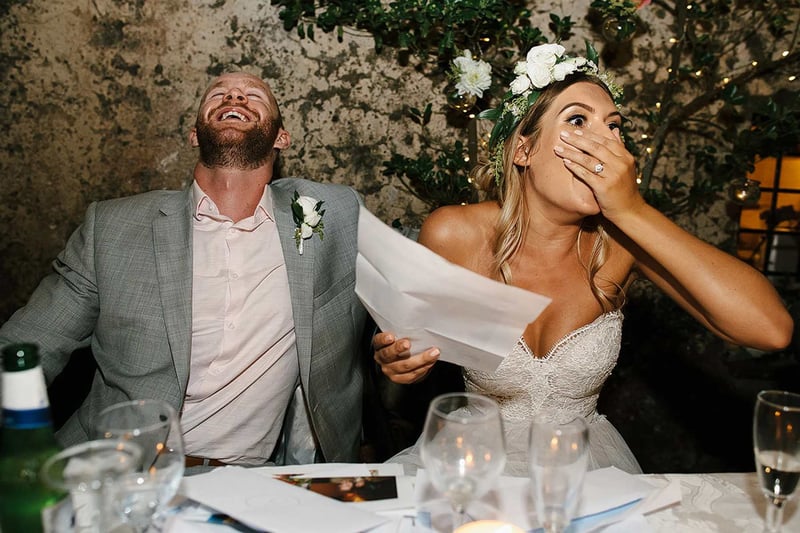
Practise out loud, not in your head. A speech that reads well on the page can still feel wrong when you say it. You need to hear it. Say it aloud, standing up, in a room, at least five times before the day. Time it every time.
Use cards, not your phone. Cards don’t require unlocking, don’t run out of battery, and don’t make it look like you’re checking your messages. Number the cards in case you drop them. Write key words rather than full sentences – you want prompts, not a script to read from.
Slow down. Nerves make everyone speak faster. Build in pauses, after a punchline, after something sincere, and let the room respond before you move on. Silence after a laugh isn’t awkward, it’s the laugh landing.
Look up. Make eye contact with the groom, with the partner, with the room. A speech delivered entirely to a piece of card is a reading, not a speech. You don’t need to maintain constant eye contact, just look up regularly, and mean it when you do.
Don’t apologise in advance. “I’m not very good at this” and “bear with me” both lower the room’s expectations before you’ve said anything worth hearing. Start with your first line. The speech will tell them what to expect.
End on the toast. The toast is the signal that you’re done. Don’t fire it off and then keep talking. Raise the glass, say the couple’s names, let the room join you, and sit down.
FAQs
What is the best structure for a best man speech?
Introduce yourself and establish how you know the groom; tell one or two stories that reveal his character; pivot to when he met his partner and what changed; say something genuine about the couple together; close with the toast.
That order works because it earns the emotional shift from funny to sincere, which is what people actually remember afterwards.
How do you write a best man speech if you don’t know the partner well?
You don’t need to know them well. Focus instead on what you observed about the groom when he met them: what changed, what you noticed, what it told you about the relationship.
One specific, honest observation from someone who knew him before is more valuable than generic praise from someone who’s met them twice.
How far in advance should you write a best man speech?
Start at least four weeks before the wedding. That gives you time to draft, leave it for a few days, come back to it with fresh eyes, and practise out loud before the day. Speeches written in the 48 hours before almost always feel rushed, and the person giving them usually knows it.
Is it okay to use notes for a best man speech?
Yes, and you should. Cards with key words or phrases are completely standard and nobody will think less of you for using them. What matters is that the speech sounds like you, not that you’ve memorised it.
Reading word-for-word from a phone or printed sheet is what to avoid; use prompts, not a script.
How do you end a best man speech?
With the toast. Move from your final observation about the couple straight into raising your glass, without another joke or a callback to an earlier story. Say both their names, mean what you say, and sit down once the room has raised their glasses with you.
Why trust Bridebook
Bridebook is the world’s #1 wedding planning platform, used by over 2.8 million couples. Our content is informed by real data from the Bridebook UK Wedding Report, which draws on responses from thousands of couples planning their weddings each year. Where expert input is included, contributors are named and their credentials verified. We update our articles regularly to ensure prices, statistics, and advice reflect current market conditions.
Related articles