Best Man Speech Examples: Templates & Tips

You’ve said yes to being the best man and writing a best man speech. Now you’re staring at a blank page wondering how you went from “this will be fine” to “I have six weeks and nothing.”
You’re in the right place. This guide gives you a structure that works, best man speech examples in four different tones you can adapt, and the honest advice that separates a speech people talk about for years from one that gets polite applause and is forgotten by dessert.
The best man speech is the one everyone looks forward to most. No pressure – but also, genuinely, no pressure. You already have everything you need: you know this person better than almost anyone in the room. The job is just getting that onto paper.
What Makes a Great Best Man Speech?
A great best man speech does three things: it makes the room laugh, it says something true about the groom, and it ends with the couple feeling celebrated rather than embarrassed. That’s it. Every other decision – how long, how funny, how sentimental – flows from those three things.
Best man speeches that go wrong almost always fail on the third point. Too many roasts, not enough heart. The room chuckles; the groom laughs nervously; the partner sits there wondering what they’ve married into. The best best man speeches are warm first, funny second – the jokes land harder because the affection underneath them is real.
Length: Aim for four to five minutes. That’s roughly 550–700 words spoken at a comfortable pace. Under three minutes feels like you didn’t try. Over seven minutes and you’re testing the room’s patience, no matter how good you are.
Structure: Introduction → stories about the groom → the moment he met his partner → what makes them right together → the toast. Every great best man speech format hits these beats in roughly this order. The structure isn’t a constraint; it’s what gives you permission to go off script in the middle bits.
Best Man Speech Structure: A Simple Template
Use this best man speech template as your skeleton. Fill in the specific details from your own friendship and you’ll have a working draft.
1. Open by introducing yourself (30 seconds)
Not just your name – one sentence that establishes your relationship and sets the tone. The best openings are either funny or warm. Avoid: “For those who don’t know me, I’m [name], the best man.” That’s the verbal equivalent of a limp handshake.
2. One or two stories about the groom (90 seconds)
These should illustrate who he actually is – not just that you’ve done funny things together. The best stories show a character trait: loyalty, stupidity, kindness, a specific kind of stubbornness. Aim for stories the groom can’t deny. Avoid: anything illegal, anything involving an ex, anything the in-laws shouldn’t hear.
3. When he met his partner (30–45 seconds)
This is the pivot point of the speech – where it stops being a roast and becomes a celebration. You knew the groom before he met them. What has changed? What did you notice? Even one specific, honest observation here does more than two minutes of generic “she/he makes him so happy.”
4. Something genuine about the couple (30–45 seconds)
This is the part most best men rush or skip because it feels harder than the jokes. Don’t skip it. A genuine observation about why these two people work – something specific to them, not “they’re perfect together” – is what makes a speech memorable.
5. The toast (30 seconds)
End on the couple. Not a joke. Not a callback to an earlier story. Raise the glass, say something sincere, give the room a clear moment to join you.
Best Man Speech Examples
These are four full examples in different tones. They’re starting points – take the speech structure, change the specifics, make them yours. Do not read them out as written. A best man speech that doesn’t sound like you will never land the way you want it to.
Example 1: Funny and warm (the classic)
For the best man who’s known the groom since school and wants a mix of laughs and genuine feeling.
“For those who don’t know me, I’m Jamie – I’ve been Tom’s best friend for about 20 years, which means I’ve had a front-row seat to every terrible decision he’s ever made, and there have been some extraordinary ones.
“Tom and I met on the first day of secondary school. He was wearing a shirt that was two sizes too small and eating a Wagon Wheel at 8:45 in the morning, and I thought: this is either going to be the worst person I’ve ever met, or we’re going to be lifelong friends. Fortunately, it was both.
“Over the years I’ve watched Tom try to learn guitar four separate times. I’ve watched him attempt to cook a roast dinner that took three hours and was somehow still cold in the middle.
“I’ve received a voice note at 1am that was just the sound of him falling off a chair.
“And I’ve sat with him on more occasions than I can count, listening to him talk about whether he was doing the right thing – at work, in life, in general – and I’ve always told him the same thing: yes, you are, you’re just anxious about it.
“The one thing he never seemed anxious about was Sarah.
“He rang me the week after they met, and I could hear it immediately – that slightly stunned quality in his voice, like he’d just remembered he’d left the oven on but in a good way. He said, ‘I think this is actually it’ and I believed him, because Tom is terrible at lying, especially to himself.
“Sarah, I don’t know if you know this yet, but you’ve taken on something that requires a reasonable amount of patience and an extremely good sense of humour. You’ve been at this for three years, and you seem undeterred, which I think says everything.
“Tom, I have watched you be a brilliant friend for two decades, and I know – because I’ve seen you be that person in harder moments than this one – that you are going to be an extraordinary partner.
“Ladies and gentlemen, please raise your glasses to Tom and Sarah.”
Example 2: Short and sincere (for the reluctant public speaker)
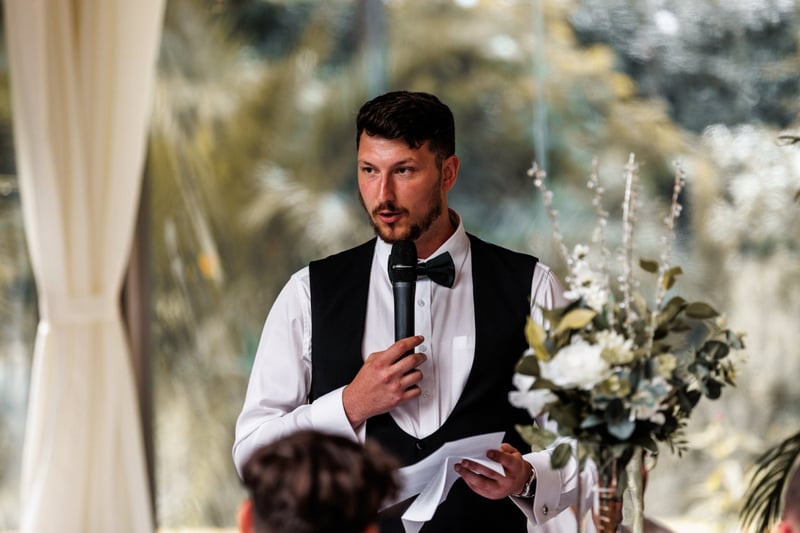
For the best man who doesn’t want to do a big performance, just say something true and sit back down.
“I’ll be honest with you, I’m not a natural at this. So, I’ve kept it short, and I’ve made sure that everything I say is something I actually mean.
“I’ve known Dan for 12 years. We worked together, which is how we became friends, and then we just never stopped. He’s the kind of person who calls you back when he says he’ll call you back. He remembers the things that matter to you. He shows up. In a world where that’s rarer than it should be, I’ve always known I was lucky to have him as a friend.
“When he met Charlotte, I watched him become even more that person. Calmer. More certain. Kinder, somehow, which I didn’t think was possible.
“Charlotte, thank you for making my friend even better. Dan, I’m proud of you.
“Please raise your glasses to Dan and Charlotte.”
Example 3: Heartfelt with light humour (for a brother or childhood friend)
For a speech that’s more emotional than funny but doesn’t tip into sentimentality.
“Marcus and I grew up on the same street. We’ve known each other since before either of us knew anything – before we knew what we wanted to do with our lives, or who we wanted to be, or what we were good at.
“I’ve watched him figure all those things out over thirty-odd years. Some of it was graceful. Some of it really wasn’t. There was a period in our mid-twenties where I’m not sure either of us knew what we were doing, and we kept each other company through that in the way that only old friends can.
“And then he met Priya.
“I’m not going to stand here and pretend I understood it immediately. I didn’t. What I understood was that something had changed – that he was different in a way I couldn’t quite name. More settled, I think. Not less himself, just surer of himself.
“Watching the two of them together, I understand it now. They make each other laugh. They take each other seriously. They argue about things that matter and let go of things that don’t. That’s rarer than people think, and I’m glad he found it.
“Marcus, you deserve every bit of this.
“To Marcus and Priya.”
Example 4: Non-traditional (where the best man is a woman, or the relationship is newer)
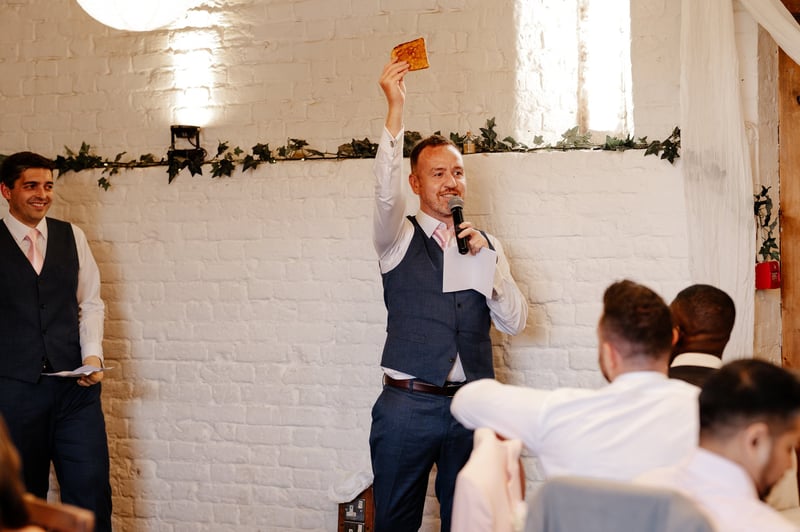
For a speech where the dynamic isn’t the classic “lifelong lads” template.
“I should probably explain that I’m the ‘best man’ in the gender-neutral, job-title sense of the word. Joe and I have been friends since university, and when he asked me to do this, I said yes before I let myself think about the bit where I’d have to stand up in front of all of you.
“Joe is one of those people who is hard to describe to someone who hasn’t met him, because the things that make him brilliant are slightly contradictory. He is genuinely the most laid-back person I know, and someone who cares intensely about doing things properly. He is very funny yet surprisingly serious. He is also terrible at accepting compliments, which means this next bit is going to be painful for him.
“Joe, you are a wonderful person and a genuinely great friend, and everyone in this room knows it, including you, even though you’re currently looking at the floor.
“Ryan, I met you properly about two years ago, and I want you to know: I was watching. Not in a weird way. In a ‘he’s my best friend and I need to know you’re good enough’ way. You are. More than.
“Ladies and gentlemen, Joe and Ryan.”
How to Write Best Man Speech Jokes that Land
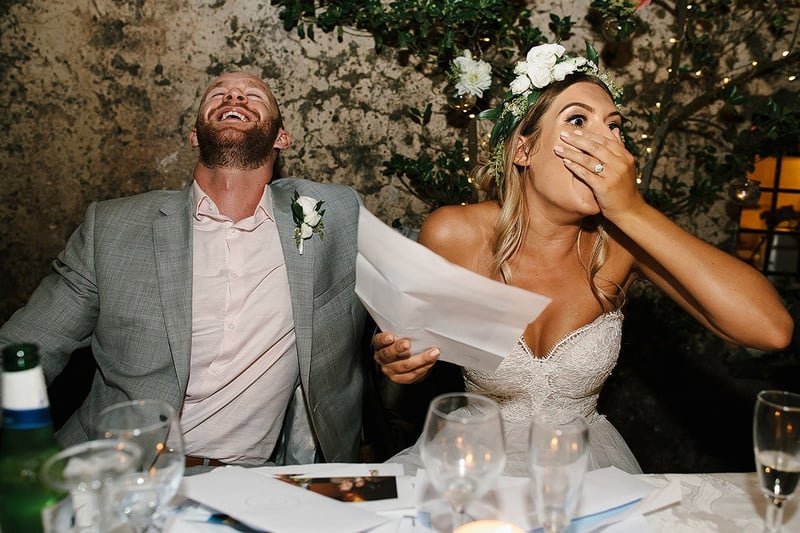
The comedy in a best man speech lives or dies on a few key things: being specific in your stories and really setting the scene for the room; making the groom the subject rather than the target (there’s a difference between a story that makes him look endearingly human and a story designed to make him look bad); and sticking to one story rather than lots (one well-chosen story does more damage – in the good sense – than five weak ones strung together).
For more in-depth tips – and one or two one-liners you can steal – we’ve got you covered in our round-up of best man speech jokes.
Best Man Speech Opening Lines
The first line sets the tone for everything that follows. To help you start strong, our article on best man speech opening lines has 25 options that you can use as a starting point, then make your own.
What Not to Say in a Best Man Speech
- Anything involving an ex. Even if it’s framed as a joke. Even if both parties are fine with it. It makes the partner uncomfortable and it’s never as funny as it seems in the writing.
- Stories that only four people in the room will understand. Inside jokes have their place – a quick reference that the groom will catch is fine. A five-minute story that requires a spreadsheet of backstory to follow is not.
- How nervous you are. Mention it once, maximum. “I’m nervous” as a running theme makes the audience nervous on your behalf and undermines every joke that follows.
- Your opinions on the wedding. The seating plan, the venue choice, the decision to have a cash bar – not your speech, not your moment.
- Anything you’d want the partner’s parents not to hear. That’s your filter. If you’re not sure, ask yourself: am I comfortable saying this in front of everyone in this room? If the answer is anything other than a clear yes, cut it.
- A speech that’s too long. The room will forgive almost anything except going on too long. Know when you’ve said what you came to say and sit down.
How to Deliver Your Best Man Speech
- Practise out loud, not in your head. A speech that reads well on paper can still feel wrong when you say it. You need to hear it to know. Say it aloud at least five times before the day – ideally in a room, standing up (the shower is great for this).
- Slow down. You will speak faster on the day than you think you will. Nerves do this to everyone. Build in pauses – after a punchline, after something sincere – and let the room respond before you move on.
- Use cards, not your phone. Cards don’t run out of battery, don’t require unlocking, and don’t make it look like you’re about to check your messages. Number them in case you drop them.
- Make eye contact. Not constantly, and not in a way that’s unsettling. But look up from your notes regularly – at the groom, at the partner, at the room. A speech delivered entirely to a piece of card is a speech, not a moment.
- Toast at the end, not the middle. The toast is the signal that the speech is over. Don’t fire it off early and then keep talking. End on the couple, raise the glass, let the room join you.
Best Man Speech FAQ
How long should a best man speech be?
Four to five minutes is the target – roughly 550–700 words at a comfortable speaking pace. Under three minutes can feel like you didn’t make much effort. Over seven and you’re testing even the most patient room.
Time yourself when you practise, not just when you read it silently.
Can someone else help write my best man speech?
If you’re really stumped, consider hiring a professional speechwriter; they’ll help you gather your thoughts and anecdotes and put them into a coherent structure.
Avoid using AI to write your best man speech, it’s important to speak from the heart. A ChatGPT best man speech is also more likely to sound generic and clichéd and lack any emotional weight.
Who should the best man thank in his speech?
Unlike the groom, the best man doesn’t need to give a long list of formal thank-yous, as that’s the newlyweds’ job.
Briefly thank the guests for attending and the couple for involving you in their day and – if appropriate – give a nod to the wedding party, including the bridesmaids and ushers, to thank them for helping the day run smoothly.
Do you have to be funny as best man?
No. The expectation is warmth and honesty. Humour helps, but a speech that’s genuinely sincere will land better than one that’s trying to be funny and falling short. If you’re not a natural comic, lean into the heartfelt version – the room will respond to it just as well, and often more.
Should the best man speech come before or after the other wedding speeches?
Traditionally, the best man speech comes last in the line-up, after the father of the bride and groom speeches. However, it’s up to the couple how they would like to order the speeches and toasts, particularly if there’s a bride speech or maid of honour speech, so always check.
You’ve Got This
Why Trust Bridebook
Bridebook is the world’s #1 wedding planning platform, used by over 2.8 million couples. Our content is informed by real data from the Bridebook UK Wedding Report, which draws on responses from thousands of couples planning their weddings each year. Where expert input is included, contributors are named and their credentials verified. We update our articles regularly to ensure prices, statistics, and advice reflect current market conditions.
You Might Also Like…
- Wedding Speech Examples: 25 Ideas for Every Role
- Father of the Bride Speech: Examples, Tips & How to Write One
- Wedding Speech Order: Who Speaks First at a Wedding?
Related articles