Muslim Wedding Guide: Traditions, Ceremony & Planning in the UK

Muslim wedding ceremonies are intimate and romantic, filled with rituals and traditions that make them wonderful and joyous occasions. If you’re planning your own Muslim wedding, you might not be sure where to start. Who do you ask to arrange one? Does a ceremony contain a religious service? What’s the order of a Muslim wedding ceremony? What traditions do you want to include and which might you want to adapt?
On top of that, did you know that Muslim wedding traditions vary depending on the region? Not to worry if you have countless questions – we’re here to dive into all the details of Muslim weddings. Whether you’re a guest attending your first Muslim wedding or a couple planning a Muslim wedding in the UK, here’s your need-to-know guide.
Disclaimer: This article is for informational purposes only and does not constitute legal advice. Always seek professional legal advice for your specific situation.
What is a Muslim wedding?
A Muslim wedding ceremony, also known as a nikah, is when a Muslim couple comes together to get married. The ceremony includes readings from the Qur’an as well as Muslim rituals.
The nikah ceremony explained
A nikah usually sticks to a set order, so you’re likely to find that any Muslim wedding you attend will follow the same structure. They allow for some personalisation, but not as many as other types of wedding ceremonies.
If you’re wondering what happens at a Muslim wedding ceremony, nikahs will usually follow an order that resembles the below:
The tolbe
Ahead of the ceremony itself, the tolbe takes place. This is a short meeting between the groom and the bride’s parents when he asks them for permission to marry their daughter. After receiving permission, everyone joins in saying a prayer called Surah Fatiha.
The mahr
A little bit like a traditional dowry, the mahr is a gift given to the bride by her groom. Many brides consider an engagement ring to be the mahr, but if not, she’ll be presented with a gift or money before the ceremony.
The consent
The bride and groom are asked three times about whether they consent to the marriage. Each time, they must say qubool hai, which means I accept.
The Nikah-Namah
The Muslim marriage contract is called the Nikah-Namah, which the couple both sign. It’s then read aloud by the officiant so all the guests can hear the promise they’re making to each other.
The readings
The officiant will read verses from the Qur’an in a short sermon. This is the point when the bride and groom are declared married.
Savaqah
The final part of the nikah is Savaqah, when gifts are given. This includes throwing money at the bride.
Traditionally, after the nikah, the couple will join their guests at the Walima, which is a celebration in the same vein as a reception at other types of weddings. However, a Walima often lasts a lot longer than other wedding celebrations, with some lasting up to two days.
Often, the Walima will happen immediately after the nikah, on the same day. Sometimes, though, depending on your preferences and circumstances, it could take place a day or two later.
What is a nikah ceremony?
Read on for your nikah need-to-know:
Who conducts a Muslim wedding ceremony?
A nikah is usually officiated by an Imam, who is a Muslim cleric, or sometimes a Qazi, an Islamic judge.
Where is a Muslim wedding ceremony held?
The traditional choice of venue for a nikah is a mosque, the Muslim place of worship, before moving on to a separate venue in the afternoon and evening for the Walima (wedding reception or banquet). Other couples may choose to get married in different venues, such as a home, hotel or venue space.
Are there vows at a Muslim wedding?
Traditionally, at the nikah, there aren’t many words exchanged between the couple. Some couples may choose to include vows in their ceremony, but the main word spoken by the couple is the repetition of the word qubool, which means I accept.
If the couple has chosen to exchange vows, there are no legal declaratory or consenting words, so they’re free to be as personal as they like.
Is a Muslim wedding legally binding in the UK?
In the UK, a couple who get married in a nikah are married in Islamic law but aren’t married under UK law. To have a legally recognised marriage, the couple must also have a legal ceremony at a registry office.
The parliament website explains it well: “Muslims in the UK have an Islamic religious marriage ceremony – a Nikah – in an unregistered building and do not have an additional civil ceremony. This means that their marriage will not be recognised as being legally valid.”
Introduction: Your Wedding Legalities
Muslim wedding traditions and customs
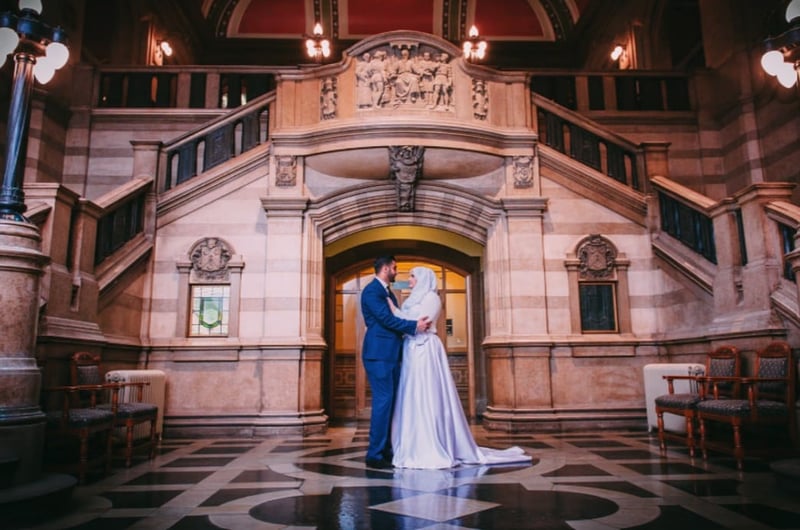
There is a wide range of traditions that take place during Muslim wedding ceremonies. These traditions also differ depending on where in the world you’re from. Below are just some of the most popular nikah traditions from different regions.
South Asian nikah traditions
Mehndi: A pre-ceremony event that brings the bride together with female guests who will design henna patterns on the bride’s hands.
Reading from the Qur’an: The first chapter of the Qur’an is read, called Surah Al-Fatihah.
Arsi Mushaf: A mirror is held between the bride and groom so the groom can see his bride’s face.
Baraat: Traditionally, the groom enters the ceremony on the back of a white horse. However, many modern-day grooms choose a car or carriage.
Joota Chupai: A fun tradition that involves guests hiding the groom’s shoes and holding them until the groom pays a fee.
Middle Eastern nikah traditions
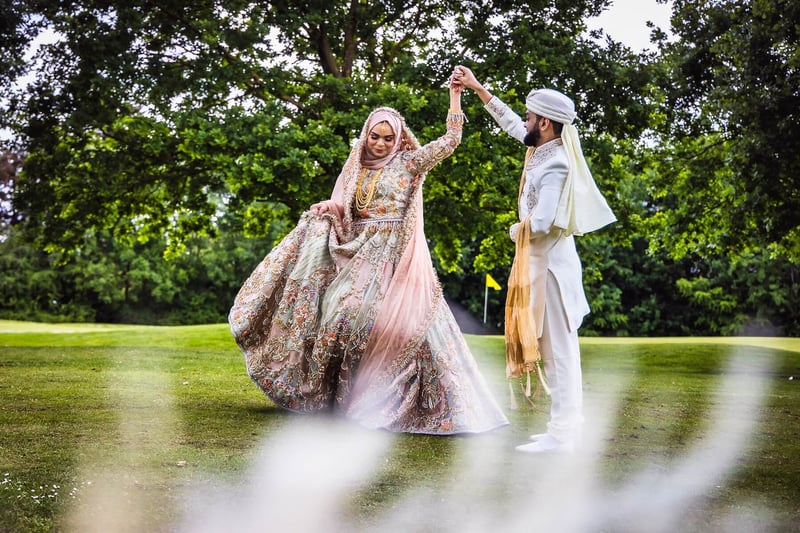
Tolbe: Before the ceremony, the groom asks the bride for her hand in marriage, which is known as the Tolbe.
Mahr: The Mahr is a gift given by the groom to his bride as a gesture of respect and to mark her independence.
What to wear to a Muslim wedding
Guests attending a Muslim wedding are expected to dress modestly and avoid bare arms, shoulders and chest. If the nikah takes place at a mosque, guests will also be asked to remove their shoes as a sign of respect and women should bring a scarf or shawl to cover their head.
FAQs
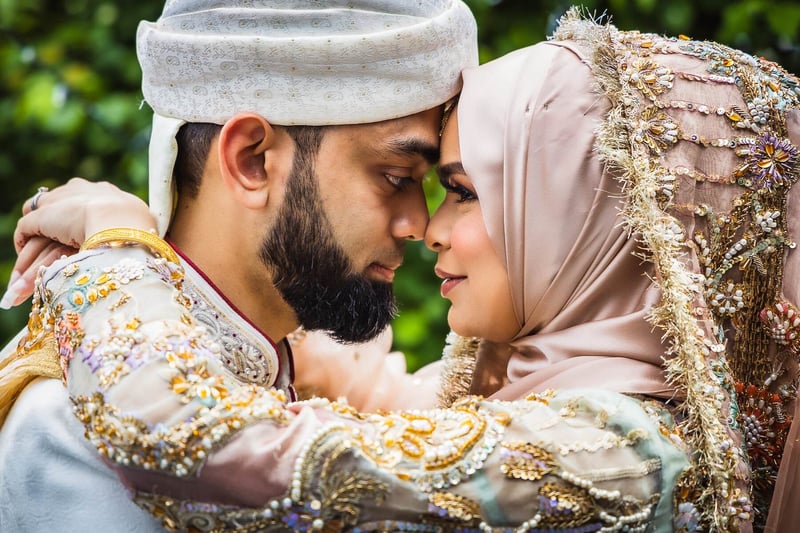
What happens at a Muslim wedding ceremony?
A nikah usually follows a set order, and most Muslim weddings you attend will follow the same structure. The ceremony – the Nikah – sees the couple consent to marriage, traditionally repeating “I accept” or “Qubool hai” three times, before the Mahr is given to the bride. The Mahr is a gift, often money or gold, which signifies responsibility for their financial security.
Next, the contract is signed which makes the marriage legally binding in Islam law, and the Iman will deliver a short sermon.
After the nikah, the couple normally joins their guests at the Walima, a celebration similar to the reception at other types of weddings. However, a Walima often lasts a lot longer than other wedding celebrations, with some lasting up to two days.
Is a Muslim wedding legal in the UK?
In the UK, a couple who get married in a nikah are married in Islamic law but not under UK law. To have a legally recognised marriage, the couple must also have a legal ceremony at a registry office.
What should a non-Muslim guest wear to a Muslim wedding?
Guests attending a Muslim wedding are expected to dress modestly and avoid bare arms, shoulders and chest. If the nikah takes place at a mosque, guests will also be asked to remove their shoes as a sign of respect and women should bring a scarf or shawl to cover their head. Non-Muslim guests should follow this dress code, dressing modestly and avoiding bare arms, shoulders and chest. If in doubt, ask the couple, they’ll be happy to advise.
How long does a Muslim wedding last?
A nikah will usually last between 30 and 45 minutes, though this can vary depending on the Imam and the number of traditions the couple chooses to incorporate into the ceremony. The Walima can last up to two days.
Planning a Muslim wedding in the UK
Bridebook, the UK’s #1 wedding planning platform used by over 2.8 million couples, has thousands of wedding venues and suppliers across the UK to help you bring your nikah and Walima together.

Once you’re engaged and looking to plan your nikah, speak to the imam at your local mosque. They can work with you to decide on a date that’s available so you can begin to plan everything else around it, such as a venue for the Walima, transport, décor, flowers, and more.
Traditionally, the parents play a heavy role in planning a nikah. However, many modern Muslim couples like to plan their own wedding, but still welcome input and suggestions from both sets of parents.
Alternatively, you may want to hire a wedding planner, who can take a lot of the work from you. See our post showcasing our Muslim wedding specialists to discover venues and suppliers who specialise in Muslim weddings.
Why Trust Bridebook
Bridebook is the world’s #1 wedding planning platform, used by over 2.8 million couples. Our content is informed by real data from the Bridebook UK Wedding Report, which draws on responses from thousands of couples planning their weddings each year. Where expert input is included, contributors are named and their credentials verified. We update our articles regularly to ensure prices, statistics, and advice reflect current market conditions.
You Might Also Like…
- The Average Cost of a UK Wedding in 2026 is £20,604
- The Ultimate Wedding Ceremony Guide
- Wedding Day Timeline: A Complete Example Schedule for Your Wedding Day
- How to Choose Your Wedding Party
Related articles