Wedding Dress Trends 2027: Three Key Looks for Nearlyweds to Know

The autumn Bridal Week has wrapped, and the wedding dress trends coming off the runway are some of the most wearable in years.
Bridebook’s Head of Content, Zoe Burke, was on the ground, and three looks kept reappearing from show to show: a boned, Y2K-inspired silhouette, capes standing in for veils, and hats taking their place at the altar.
Wedding Dress Trends for 2027 & Beyond
Here’s what’s worth knowing about when it comes to 2027 wedding dress trends, and how to make them your own.
Y2K Bridal: corsets, two-pieces and capri-length skirts
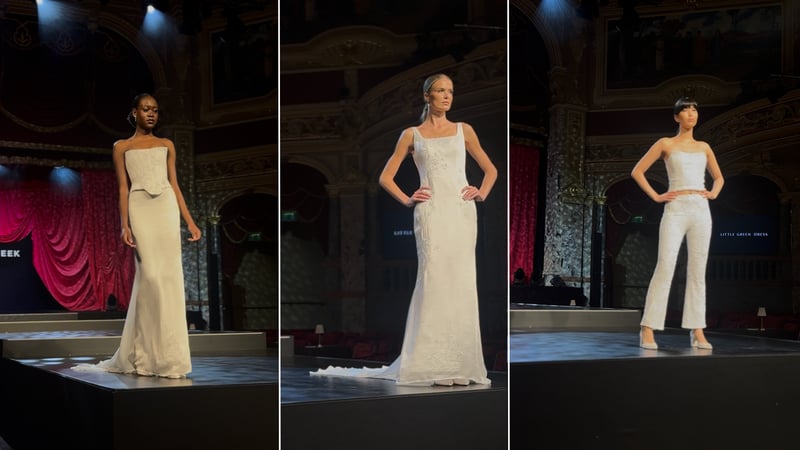
Corsetry was one of the most talked-about trends of the season, and it’s easy to see why.
A structured, boned corset wedding dress does the same job as the bodices brides fell for in the early 2000s: it nips in the waist and gives a gown proper architecture, without needing a heavy underlayer to do the work.
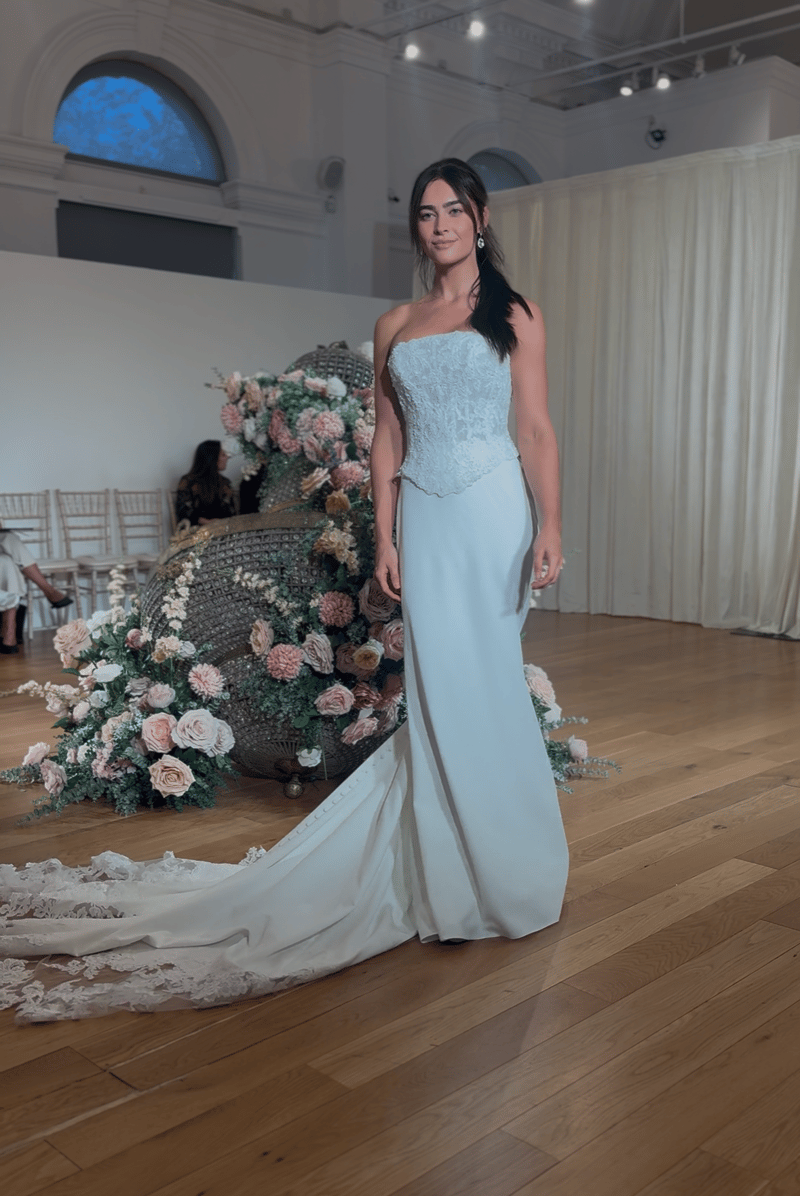
Allure showed several versions across the collection, with an exposed corset finish that puts the boning on display rather than hiding it under fabric.
Two-piece wedding dress designs were just as strong a theme.
Corset tops or fitted bodices were paired with separate skirts, including cute corset-and-trousers combos, a direct nod to Y2K bridal separates.
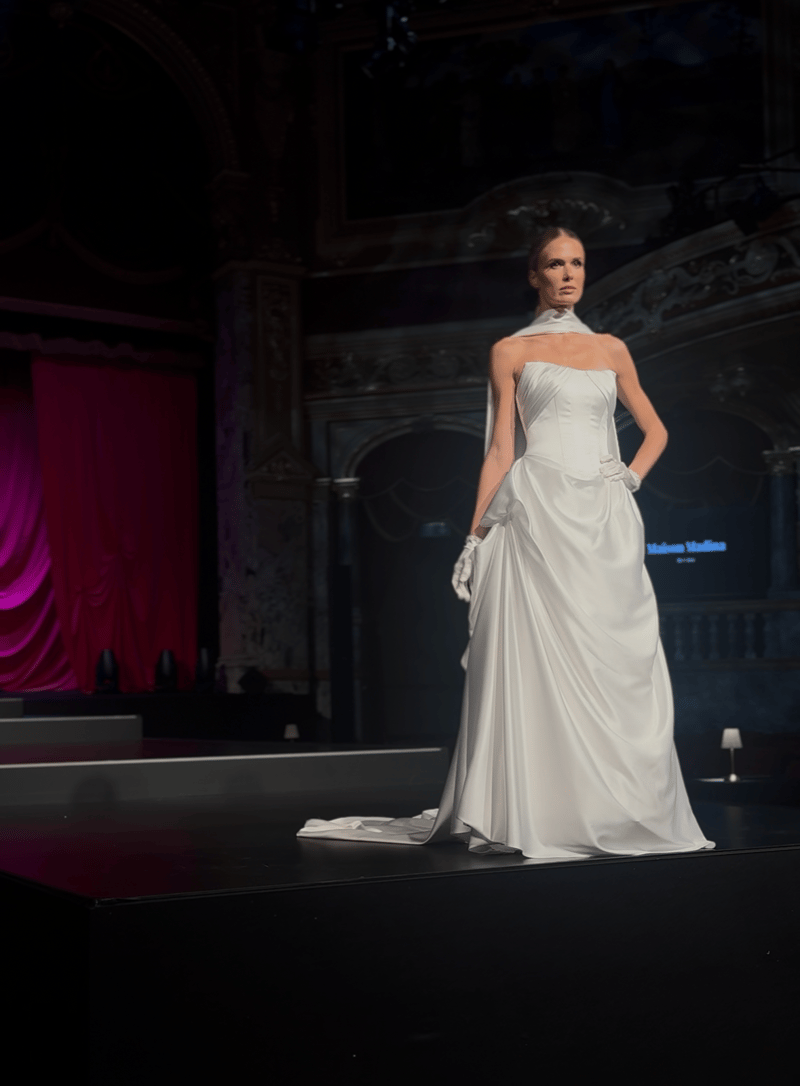
Little Green Dress leaned into this with a two-piece with bridal trousers, while Allure and Maison Madina both showed corset-and-skirt combinations that could be worn together for the ceremony and reworn separately for the party.
For a nearlywed who wants one dress to do two jobs, bridal separates are worth putting on the shortlist.
The detail to watch across all of it is appliqué: raised, textured motifs worked into the corset or bodice, adding dimension without adding colour. It’s a subtle way to bring in the Y2K reference without going full pastiche.
Capes: the accessory replacing the traditional veil
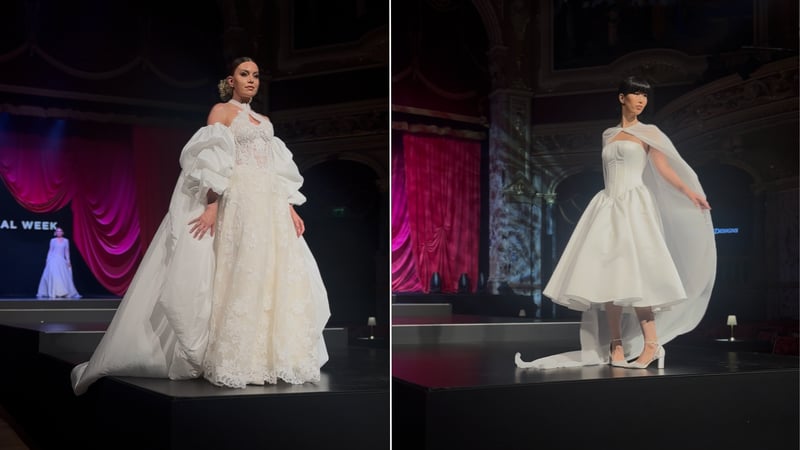
Capes had a real moment this season, standing in for veils on gown after gown. A wedding cape adds drama and coverage without the fuss of managing tulle, and it photographs beautifully from behind, which is exactly why so many designers reached for one.
Jane Aston and Richard Designs both showed capes as a considered part of the silhouette rather than an afterthought, with clean lines that work over both a fitted gown and a fuller skirt.
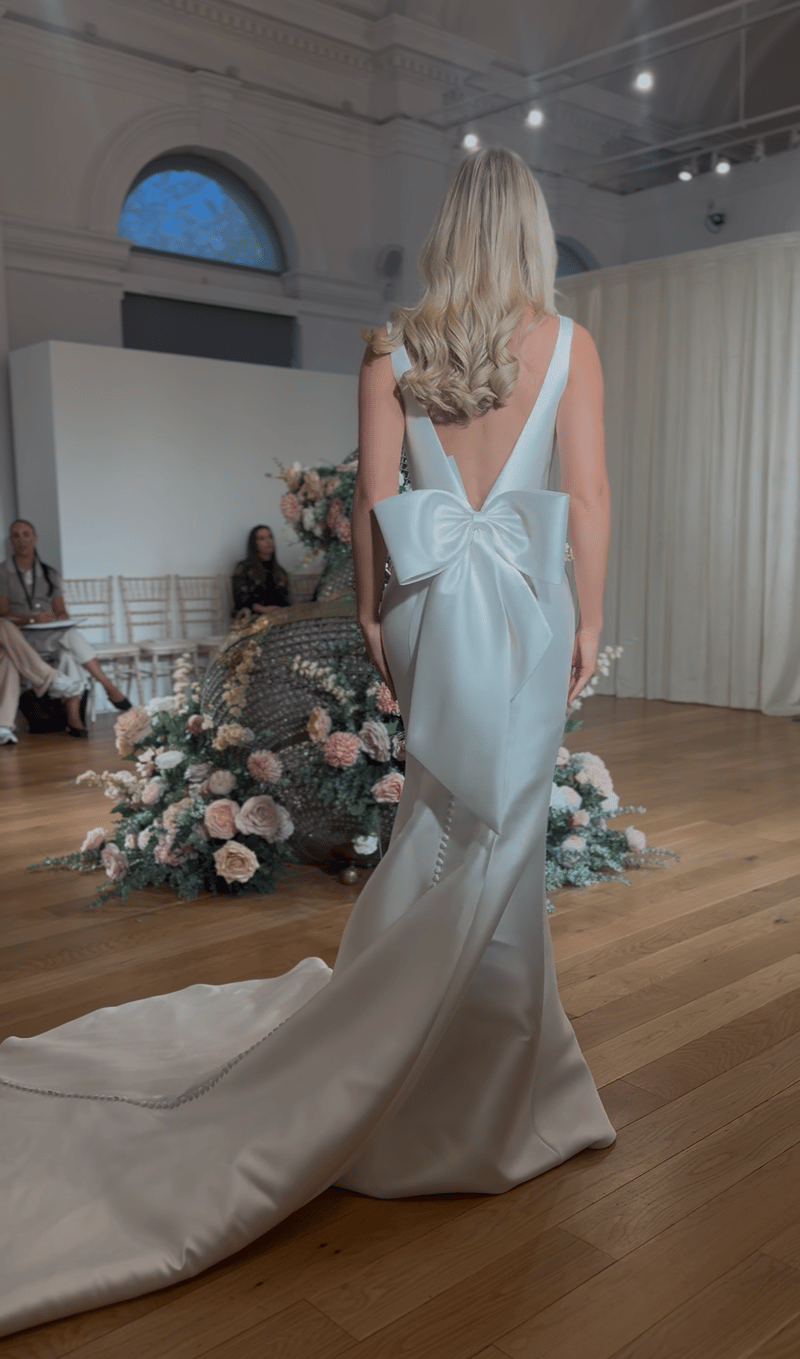
Bow details were the accessory sub-trend sitting right alongside capes this season. Allure and Rebecca Yoxall both showed oversized bows, worn as a statement at the back of a cape or dress, giving the same graphic impact as a cape without the same coverage. If a full cape feels like a lot, a bow is the toned-down version of the same idea.
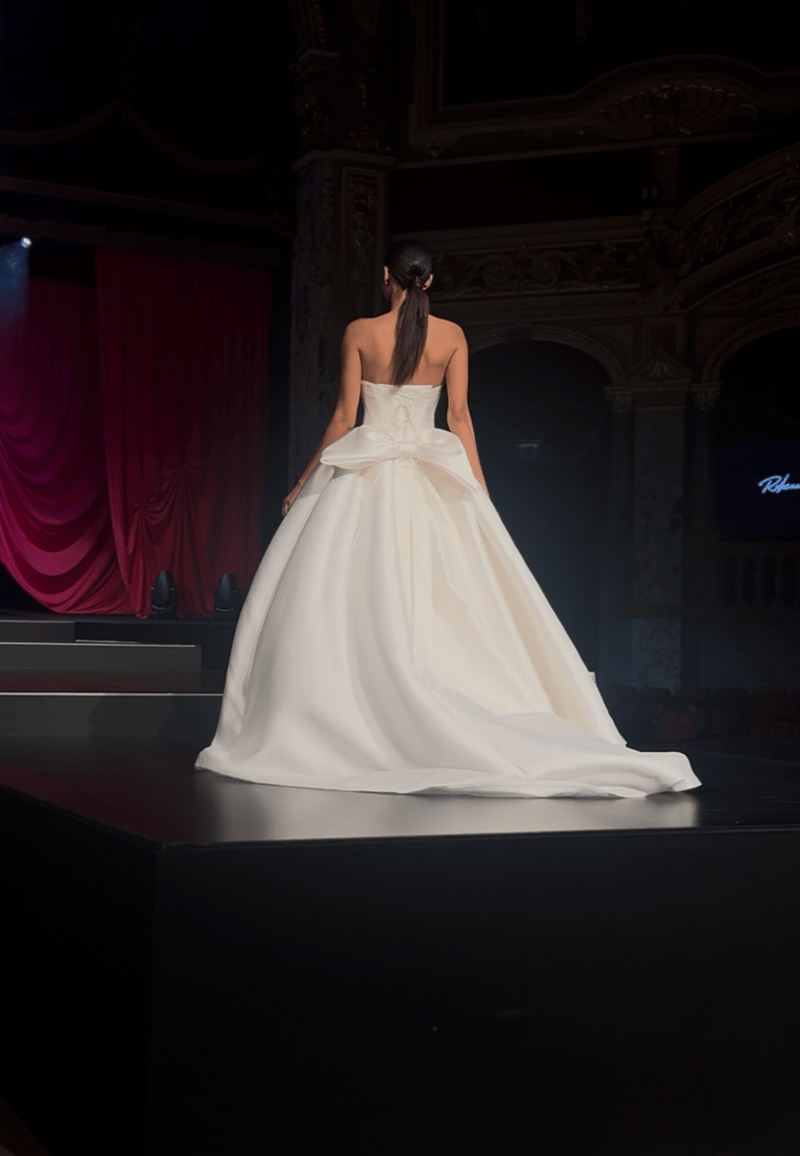
Practically, a cape wedding dress is worth considering for anyone getting married somewhere cold, or anyone who wants the drama of a train without the weight of one. Several of this season’s capes are detachable, so it’s possible to have the full moment walking down the aisle and then unclip it for dancing later on.
Hats: the alternative to a veil that isn’t a headpiece
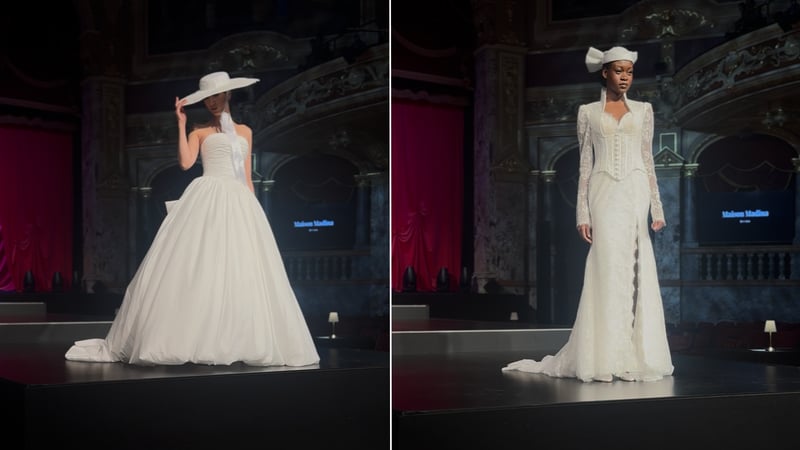
The other story in headwear this season had nothing to do with veils at all. Rather than the sculptural caps and headpieces that have circulated for a couple of seasons, this round of shows brought back the bride hat properly: a wide-brimmed or structured hat, worn instead of a veil or headpiece entirely.
Maison Madina showed it twice across the collection, styled with both a minimal gown and a more embellished one, which says a lot about how versatile the look actually is.
It’s a trend with real crossover appeal beyond the ceremony too. A bridal hat works for an outdoor wedding in bright sun just as well as it does for a registry office look, and it’s a genuinely practical option for anyone who finds a veil gets in the way. Think Dua Lipa, Francesca Allen and more.
Expect to see it paired with simpler, less embellished gowns over the next year, since the hat is doing the styling work that a statement veil or headpiece would otherwise do.
Making it your own
None of these looks are all-or-nothing. A boned corset works just as well under a plain skirt as it does with capri pants, a bow can do the job a full cape does at a fraction of the drama, and a hat can be swapped for a veil for the ceremony and put back on for photos.
Want to bring these trends to life? Find a wedding dress shop near you now.