Backyard Wedding Ideas for Canadian Couples

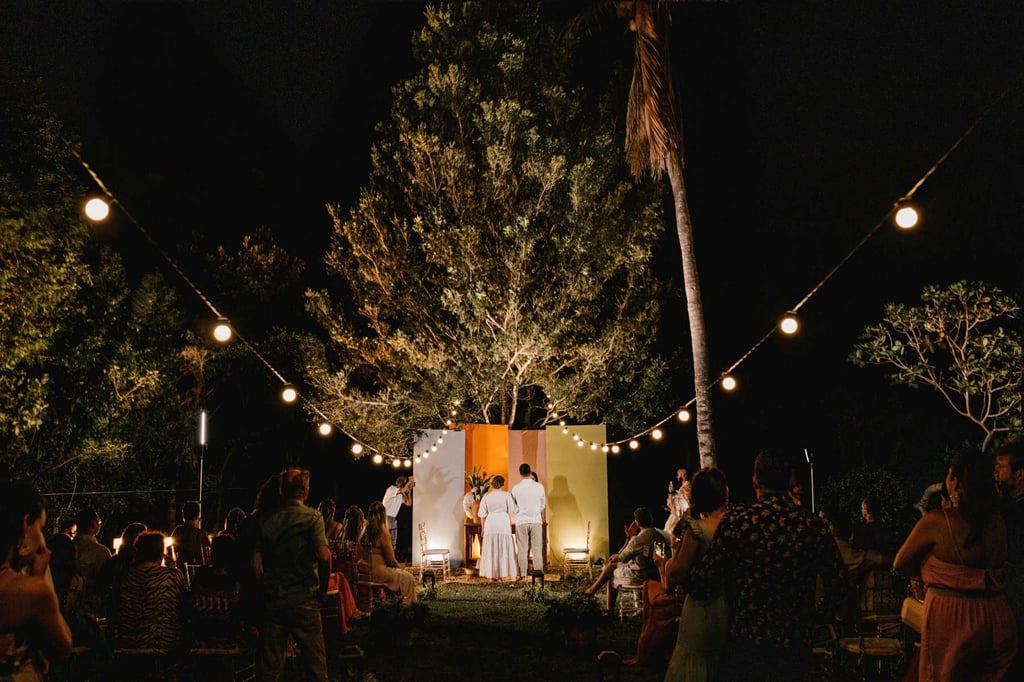
There’s something lovely about getting married somewhere that already means something to you. Your parents’ garden. The cottage you’ve been going to since you were small. The backyard where you had your first barbecue as a couple.
Backyard weddings are relaxed, personal and completely flexible. You choose the timings, you choose the menu, and nobody’s going to hand you a list of approved vendors or turf you out at 11pm (although your municipal noise bylaw might, but more on that later).
They can also be kinder on your budget, which is part of why so many Canadian couples choose them. But “at home” doesn’t mean “no planning”. A backyard is a blank canvas, and blank canvases need a bit of thought.
So here’s everything you need: the pretty bits, the practical bits, and the details that make an at-home wedding feel like a proper celebration rather than a very nice garden party.
Start planning your wedding with Bridebook
Disclaimer: This article is for informational purposes only and does not constitute legal advice. Always seek professional legal advice for your specific situation.
Why Backyard Weddings Are So Popular

They cost less to host. Venue hire is usually the single biggest line item in a wedding budget, so removing it frees up a meaningful chunk of money for the things you actually care about. You’ll still have costs (we’ll get to those) but you’re paying for equipment rather than someone else’s overheads.
They suit smaller guest lists. Plenty of Canadian backyards comfortably hold 40 to 80 people, which happens to be exactly where a lot of couples want to land anyway. If you’re leaning towards something more intimate, our guide to small wedding ideas is a good companion read.
You’re not on the clock. No four-hour ceremony slot, no rushing your photos because another couple is arriving. You can start whenever you like and let the evening run long.
Everything is yours to decide. Your music, your food, your dog as ring bearer. Home venues are the most flexible option going, and that flexibility is the whole appeal.
It already looks like you. No amount of styling makes a ballroom feel personal. A backyard starts personal.
Backyard Wedding Ceremony Ideas
Your ceremony space needs to do one job: give everyone a clear view of the two of you. Everything after that is decoration.
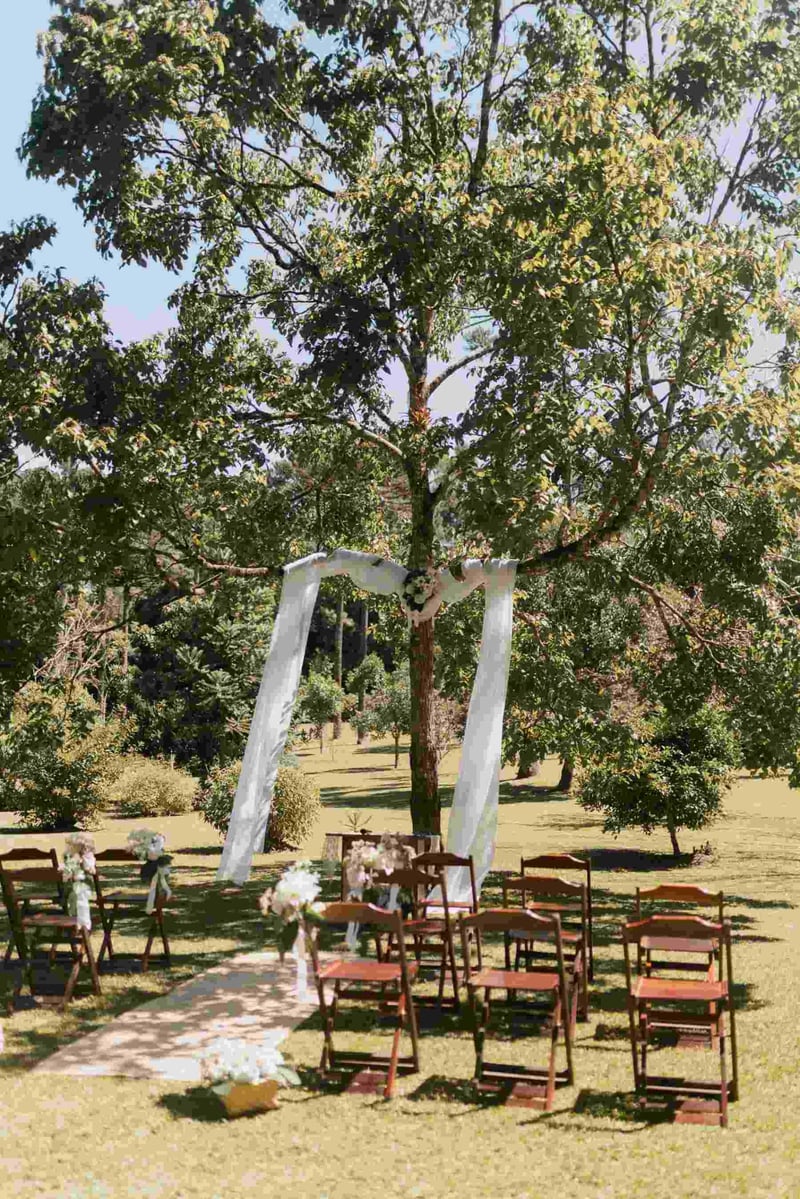
- Get married under a tree. A mature maple or oak gives you natural framing, dappled light and shade for your guests, and it costs nothing.
- Build a simple arch or arbour. Wood, copper piping or bare birch branches, dressed with seasonal greenery. It anchors your photos and marks the spot.
- Line the aisle. Potted plants, lanterns, hurricane vases or a scattering of petals along a mown path. Skip loose candles if it’s been a dry summer.
- Rethink the seating. Wooden folding chairs, hay bales with blankets, or a semicircle so guests are gathered around you rather than lined up behind each other.
- Use the light. Canadian summer evenings are generous. In much of the country, the sun doesn’t set until well past 8:30pm in July. An early-evening ceremony gives you golden light for photos and a naturally cooler temperature for your guests.
- Face away from the house. Point your ceremony towards the prettiest view you’ve got, and keep the deck, shed and parked cars behind the camera.
One small thing that makes a big difference: if you’ve got more than about 30 guests, rent a microphone and a small speaker. Outdoor space swallows sound, and nobody wants to miss your vows.
Backyard Wedding Reception Ideas
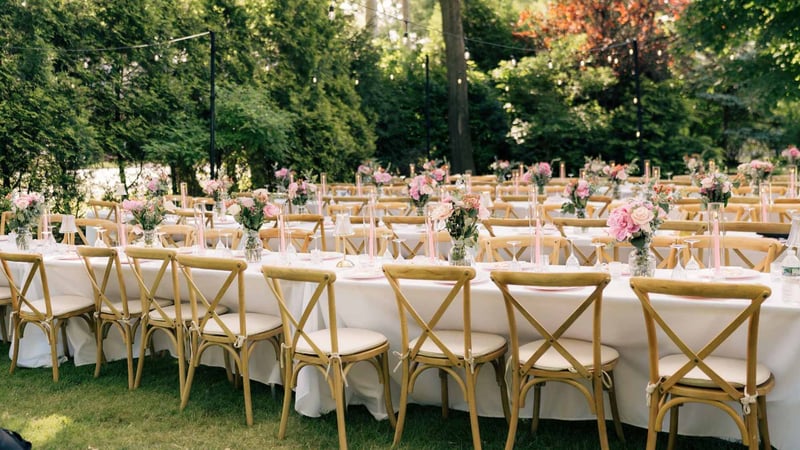
This is where a backyard really comes into its own.
Long banquet tables are the classic choice. They make a garden feel like a proper dining room and encourage everyone to talk to each other. Run them down the length of the lawn, or under a tent if you’re expecting weather.
String lights overhead do more heavy lifting than any other single decoration. Zigzag them between trees, along a fence line or across the tent ceiling. Add lanterns, hurricane lamps or solar stakes at ground level and the whole space transforms once the sun drops.
A dance floor is worth renting. Grass and heels don’t get along, and dew makes lawns slippery by 10pm. A parquet or plywood floor laid over the grass solves both problems.
Lounge corners give guests somewhere to land between courses. A couple of outdoor sofas, an outdoor rug, a few cushions and a low table is all it takes.
A fire pit extends your evening beautifully. Canadian nights cool off fast, even in August. Stack blankets in a basket nearby, add a s’mores station, and you’ve created the part of the night everyone remembers. Just check your municipality’s open-air burning rules and any fire ban in effect first.
Lean into the food. Backyard weddings suit relaxed catering: a wood-fired pizza oven, a taco station, a barbecue spread, family-style platters passed down the table. And a late-night poutine bar has never once disappointed a Canadian wedding guest.
Backyard Wedding Decor Ideas
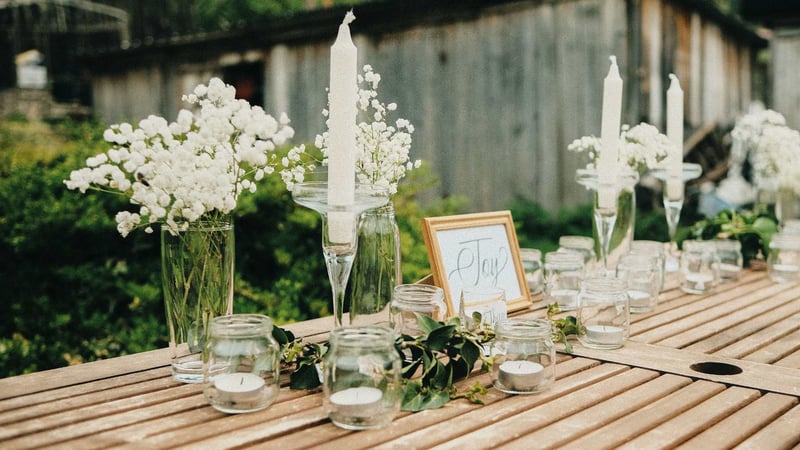
The trick with at-home decor is restraint. You’re enhancing a space that’s already got charm, not covering it up.
- Seasonal, local flowers. Peonies in June, sunflowers and dahlias in late summer, dried grasses and branches into autumn. Buying what’s in season locally is both cheaper and better looking.
- Mismatched everything. Thrifted china, coloured glassware, vintage linens. It reads as considered rather than cheap, and it’s a genuinely fun thing to collect over the months of planning.
- Hand-lettered signage. A welcome sign, a seating plan, a bar menu, an arrow pointing towards the washrooms. Wooden boards, mirrors or framed prints all work.
- Personalized place settings. A sprig of rosemary, a name written on a stone, a Polaroid of you with that guest. Small, cheap, and the thing people take home.
- Layered lighting. Overhead string lights, table candles, lanterns along paths, uplighting on trees. Three levels of light is the difference between “backyard” and “magical”.
- Tie in the house. Dress the porch, hang a garland on the front door, put flowers in the kitchen window. Guests will pass through, so make those bits count too.
Need a direction to pull it all together? Browse our wedding themes guide for inspiration.
Practical Tips for Planning a Backyard Wedding
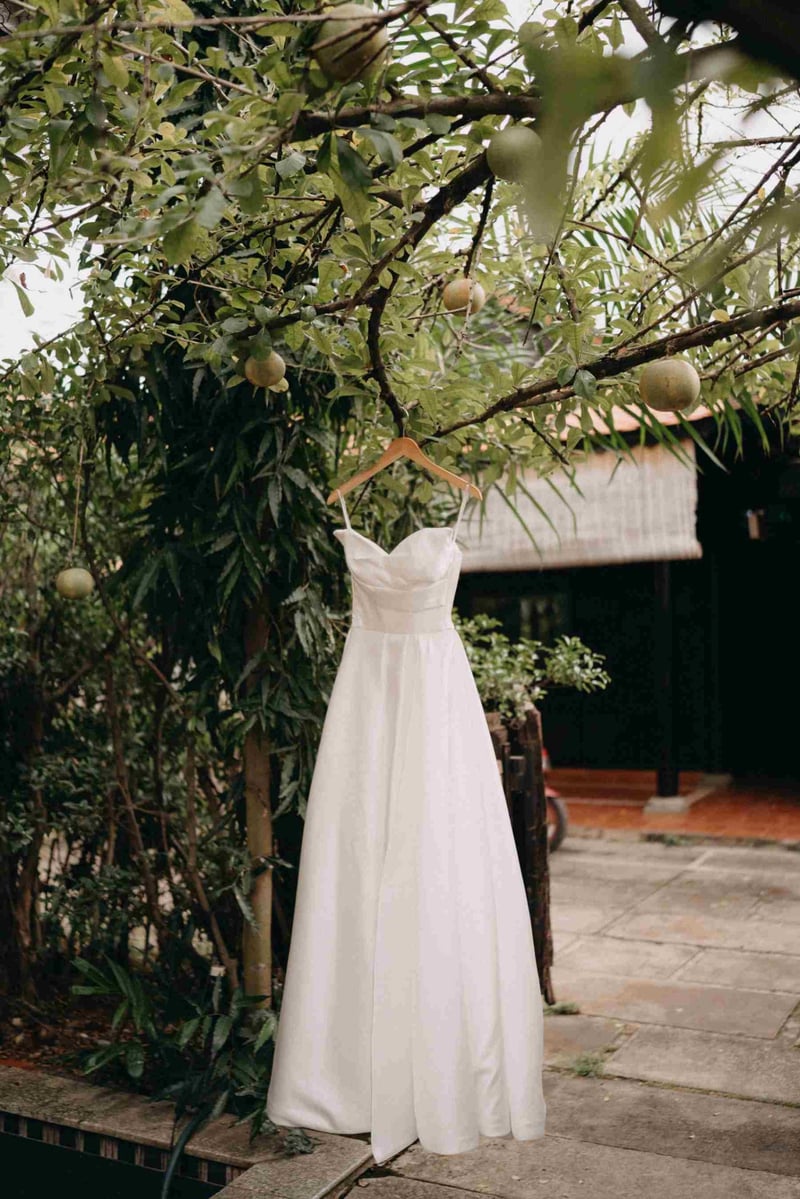
Here’s the part the Pinterest boards leave out. None of it is difficult, but all of it is much easier handled six months early than six days early.
Check your permits and bylaws. Municipal noise bylaws typically require music to stop somewhere between 11pm and midnight. Larger tents often need a permit from your city or township. Some municipalities also have rules about temporary structures and event occupancy on residential property. One phone call to your city clerk’s office will answer all of this.
Sort out the alcohol licence. If you’re serving alcohol at a private property event in Canada, you’ll usually need a permit, such as a Special Occasion Permit through the AGCO in Ontario or a Special Event Permit through the LCRB in British Columbia. Rules and lead times vary by province, so check yours early. Your caterer or bartender may also need Smart Serve or ProServe certification.
Get event insurance. Your homeowner’s policy almost certainly doesn’t cover 70 guests, a marquee and an open bar. A one-day event liability policy is inexpensive and worth every dollar. Speak to your insurer, and check whether host liquor liability is included.
Plan for weather, properly. Canadian summers have thunderstorms, humidity and cold snaps in equal measure. A tent with optional sidewalls is the single best insurance policy you can buy, book it as your plan A, not your plan B. Add patio heaters or a fire pit for the evening, and keep umbrellas by the door.
Deal with the bugs. Mosquitoes and black flies are a real consideration, particularly near water and particularly in late spring. Citronella candles, a bug spray basket at the entrance and outdoor fans near seating areas all genuinely help.
Think about washrooms. One household bathroom for 70 guests is a long queue and a lot of strain on a septic system. Portable washroom trailers have come a long way; many have proper flushing toilets, sinks, lighting and mirrors.
Check your power. Catering equipment, lighting, a band and a coffee machine will trip a residential circuit. Ask your rental company about a generator, and run everything past your caterer in advance.
Sort parking. Residential streets fill fast and neighbours notice. Arrange a nearby lot, a field, or a shuttle from a central pickup point.
Tell your neighbours. Ideally in person, ideally with plenty of notice. Some couples invite them for the ceremony or evening drinks. It costs you two extra seats and buys you a great deal of goodwill.
Prep the lawn. Mow a few days ahead rather than the morning of, so it’s dry and the clippings have settled. And before anyone stakes a tent, get your underground utilities located; it’s a free service in most provinces.
Keep track of every task with your free Bridebook checklist
How to Make a Backyard Wedding Feel Special
The risk with an at-home wedding is that it feels like a nice party rather than a wedding day. These are the things that tip it over.
Create a clear arrival moment. A decorated gate, a welcome sign, a drink handed over the second guests walk in. Guests need to feel like they’ve arrived somewhere, not just wandered into a garden.
Zone the space. Ceremony here, drinks there, dinner over there, dancing at the far end. Moving guests between distinct areas creates the rhythm a wedding day needs.
Serve something that’s yours. Your grandmother’s recipe. The wine from the vineyard where you got engaged. Butter tarts from the bakery down the road. Food is the easiest way to make a day feel specific to you.
Set up lawn games. Bocce, croquet, cornhole, giant Jenga. They fill the gap between ceremony and dinner and give people who don’t dance something to do all evening.
Give guests something to take away. A campfire singalong, a Polaroid guestbook, sparklers as the light goes, a blanket with your names on it.
Backyard Wedding Budget Considerations
Backyard weddings can absolutely save you money, but it’s worth understanding where the savings actually come from.
For context, the average Canadian couple spends around $30,000 on their wedding. You can see exactly where that goes in our Canadian wedding budget breakdown.
Skipping a venue removes the hire fee, and often the minimum-spend requirements and per-head catering markups that come with it. That’s the big win.
What you take on instead is the infrastructure a venue would normally provide. Budget for:
- Tent or marquee rental, plus flooring and sidewalls
- Tables, chairs, linens, crockery, glassware and cutlery
- Catering, plus a kitchen or prep tent
- Portable washrooms
- A generator and additional lighting
- A dance floor
- Your alcohol permit and event insurance
- Setup, teardown and waste removal
- Landscaping or lawn repair afterwards
Add it up before you commit. For a larger guest list, backyard weddings occasionally work out similar in cost to a small venue, which is completely fine if you’re doing it for the atmosphere rather than the savings. Just go in knowing which one it is.
Two things that reliably bring the number down: a shorter guest list and an off-peak date. Both matter more than any decor decision you’ll make.
FAQs
How much does a backyard wedding cost in Canada
According to Bridebook data, the average Canadian wedding costs around $30,000. A backyard wedding can bring that down by removing venue hire, though you’ll still need to budget for a tent, rentals, catering and permits.
Do you need a permit for a backyard wedding in Canada?
You may need permits depending on your municipality and province. Larger tents often require a permit, and serving alcohol usually requires a provincial licence such as a Special Occasion Permit in Ontario or a Special Event Permit in British Columbia. Check with your local city or township office early.
How many guests can a backyard wedding hold?
It depends on the size of your yard and whether you’re using a tent. It’s worth measuring your space and mapping out a rough table layout before you finalise numbers.
Is a backyard wedding cheaper than a venue wedding?
Usually, yes, since you avoid venue hire and minimum-spend requirements. You’ll take on costs a venue would normally cover instead, like tent rental, tables, chairs, washrooms and a generator, so it’s worth totalling these before assuming it’ll come in significantly cheaper.
What’s the best way to light a backyard wedding?
Layering your lighting works best: string lights overhead, candles or lanterns on tables, and lighting along paths or up into trees. This creates depth once the sun goes down rather than relying on one bright source.
Plan Your Wedding with Bridebook
Bridebook, the world’s #1 wedding planning platform used by over 2.8 million couples, is built for exactly this kind of planning. A backyard wedding has more moving parts than a venue wedding, which makes staying organized the whole game.
Bridebook is free, and it keeps everything in one place:
- a personalized wedding planning checklist that adjusts to your date
- a budget tool that tracks what you’ve spent against what you planned
- a guest list manager with RSVPs, dietary requirements and your seating chart
- a directory of Canadian vendors including tent and rental companies, caterers and photographers near you
And if you decide a backyard isn’t quite right after all, you can browse wedding venues across Canada in the same place. Plenty of them will give you that same relaxed, outdoors-and-string-lights feeling with the logistics already handled.
Create your free wedding planner
You Might Also Like…
- How to Plan a Wedding
- The Ultimate Canadian Wedding Budget Breakdown
- Wedding Themes: 25 Ideas for Every Wedding Style
- Your Wedding Planning Checklist
Related articles